ChromaSense Oximeter Adapts to Skin Tone
Tufts University researchers have developed a prototype wrist-worn pulse oximeter that adjusts to skin pigmentation for more accurate blood oxygen readings
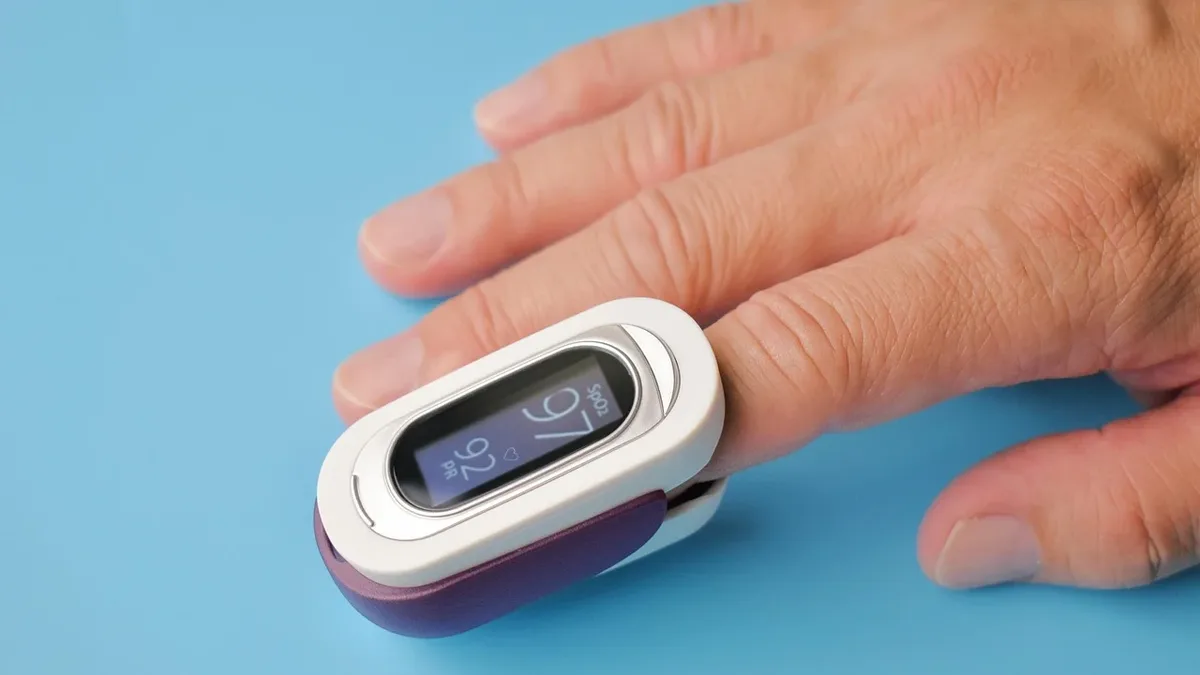
A prototype wearable device aims to fix a critical flaw in pulse oximetry: inaccurate readings for people with darker skin. Developed by researchers at Tufts University, the watch-sized ChromaSense system measures reflected light from the wrist and automatically adjusts its settings based on a person's skin tone.
Traditional pulse oximeters pass light through tissue, often a fingertip. Variations in skin pigmentation can distort this signal. Melanin absorbs and scatters light, which can weaken the signal or skew the ratio used to calculate oxygen saturation. This has led to documented inaccuracies for patients with darker skin.
How ChromaSense Works
The ChromaSense device takes a different approach. It first measures a person's skin reflectance profile. The system then adjusts both the level of light it emits and its signal-processing parameters accordingly. This tailored method uses photoplethysmography to measure the pulsing waveform of blood volume in the microvasculature.
"If you train a model that converts light signals to blood oxygen, pulse or pressure and you don't ensure that the dataset that you're training with is diverse enough in terms of age, race, and gender, it can affect the performance or accuracy of the model," says Valencia Koomson, PhD, associate professor at Tufts University, in a release. She warns that an apparently high-performing model can look far less impressive when analyzed by specific demographic groups.
Clinical Testing Results
The device was tested at the Hypoxia Research Laboratory at the University of California, San Francisco. Healthy adult volunteers with diverse skin tones participated, including Black, Asian, Hispanic, White, and multiethnic individuals. Researchers briefly lowered oxygen levels across a 70% to 100% saturation range to test accuracy.
In this study, ChromaSense achieved an oxygen-saturation measurement accuracy within 2.87% of a standard reference oximeter that reads directly from the blood. This performance meets FDA requirements and showed no observable bias dependent on skin tone.
Future Blood Pressure Monitoring
The research team is exploring an additional function. They are working to integrate machine-learning models for cuffless blood pressure monitoring. By parsing subgroups by skin tone, age, and gender, they have estimated systolic and diastolic blood pressure from photoplethysmography waveforms.
This work used data from 2,315 adult intensive care unit patients in large healthcare databases. The team reported accuracy up to 90% for these blood pressure estimates. "The blood-pressure work is not yet built into ChromaSense," Koomson clarified in the release. "But the goal is in the future to embed that machine learning model into the device."
The prototype represents a step toward more equitable medical diagnostics. It directly addresses a known source of error in a common clinical tool. For individuals managing sleep disorders like sleep apnea, where overnight oximetry is a key diagnostic, such accuracy is crucial. Reliable data on fixtures like oxygen desaturation events informs treatment plans and monitors their effectiveness over time.