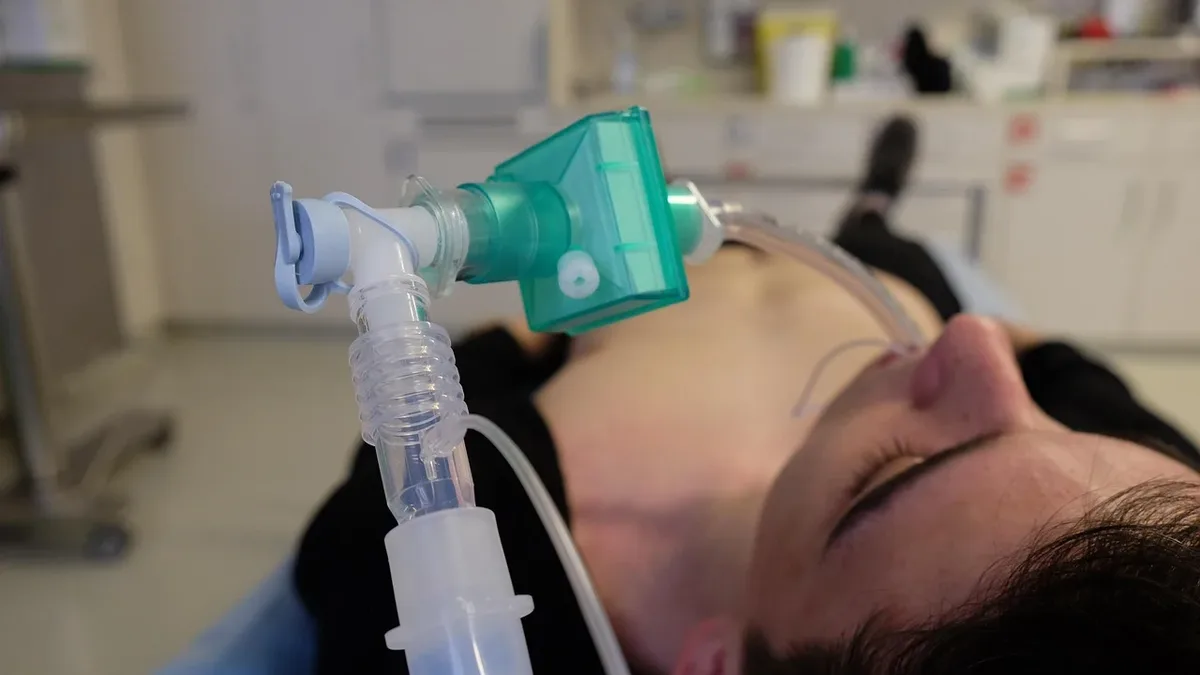
Facial Hair Poses CPAP Mask Fitting Challenge, Survey Finds
A survey of sleep professionals finds 41% identify patients with facial hair as the hardest to fit for CPAP therapy.
Facial hair remains a significant fitting challenge for positive airway pressure therapy. In a 2026 Sleep Review Peer Pulse survey, 41% of sleep professionals identified patients with facial hair as the hardest population to fit successfully.
High-pressure users and patients with craniofacial differences tied for a distant second at 15% each. Also, 78% of respondents said they wanted manufacturers to develop better solutions for facial hair. The source, Sleep Review, reports that while beards complicate fitting, they are often blamed for every leak when other factors like mask size, cushion position, or interface choice may be the real issue.
Start With the Seal, Not the Beard
A beard alone does not dictate mask choice. A mustache presents a different problem than a goatee, and a closely trimmed beard differs from several inches of dense hair. What matters is where the cushion meets the hair. A substantial beard may barely interact with nasal pillows, while a traditional full-face mask may place its seal directly on hair.
A 2025 systematic review of 21 studies on other close-fitting respiratory masks found facial hair can seriously degrade sealing performance. Factors include hair length, density, the individual wearer, and the particular mask. This research is not CPAP-specific, and direct evidence on how beard characteristics should alter CPAP mask choice remains limited.
Make the Sealing Problem Smaller
If a patient breathes comfortably through the nose, a nasal interface is a reasonable starting point. An American Thoracic Society workshop report concluded nasal CPAP should be the initial option for most patients while emphasizing individualized selection. A nasal interface may stay out of the beard's way. Nasal pillows seal at the nostrils, and minimal nasal designs may keep most sealing surfaces away from cheeks and jaw.
This does not mean a beard automatically requires nasal pillows. Some patients cannot breathe through their nose, struggle with mouth leak, or simply prefer mouth coverage. The goal is to recognize when one appropriate mask creates an easier sealing path than another.
When Mouth Coverage Is Needed
For patients needing a full-face interface, the fitting is not doomed. Cushion geometry matters. Two full-face masks can place their cushions in different areas. One may run through dense hair on the cheeks, while another may sit differently beneath the nose. If a mask leaks where it crosses dense hair despite reasonable adjustment, trying another size, cushion shape, or interface is recommended.
Test the Fit Under Realistic Conditions
An easy way to make a mediocre fit look impressive is to test with the patient upright and perfectly still. The ATS workshop report recommends a trial with pressurized air for proper mask fit. In practice, experts suggest using representative therapy pressure and having the patient lie back, turn their head, relax their jaw, and assume their normal sleep position.
A cushion sitting across facial hair may seal while upright but leak when the jaw relaxes or a pillow pushes the mask sideways. A lower-corner leak with jaw movement differs from a seal that fails only when turning onto one side. If the leak repeatedly appears exactly where the cushion crosses the densest hair, facial hair is a likely culprit.
More Strap Is Not More Fit
The universal solution of tightening the straps is often overused. More tension is not automatically a better seal. Overtightening can create discomfort, pressure points, and sometimes a worse seal. If a mask only works when painfully tight, it is not a good fit. The advice is to go back to basics: size, position, leak location, and whether that spot crosses thick hair.
**Fit the Beard That Is Staying**
A key early question is, "Is this normally how you wear your facial hair?" Three days of stubble is one situation; a beard worn for 15 years is another. If the beard is staying, the fitting should accommodate it. For the initial fitting, a clean, dry face is preferred to evaluate the cushion against actual skin and hair rather than lotion or beard product.
Trimming a particular area may help some patients if they want to do it. However, shaving should not be the price of admission to CPAP because the first mask tried leaked. Multiple mask styles, sizes, and sealing paths are available. The approach is to adapt the equipment to the patient before asking the patient to redesign their face for the equipment.
**Better Masks May Help**
There is optimism about future mask technology. Survey respondents expressed interest in skin-friendly materials, custom-fit 3D-printed masks, and better leak detection. Personalization is advancing; Health Canada lists a custom-fit CPAP/BiPAP/APAP mask as an active Class II licensed device. Experts note we can already look at anatomy instead of assumptions, change the sealing path, and test under realistic conditions. A difficult first fit does not always mean the patient is difficult to fit; sometimes the equipment has not caught up with the face yet.