Oximetria Nocturna
Origin and history
Oximetria Nocturna, or nocturnal oximetry, originated as a diagnostic technique in the field of pulmonology and sleep medicine during the latter half of the 20th century. Its development is closely tied to the invention and miniaturization of pulse oximetry technology, which was pioneered in the 1970s, primarily in Japan and the United States. The specific application of this technology for overnight monitoring evolved in the 1980s as clinicians sought simpler, unattended methods to screen for sleep-related breathing disorders. It emerged as a practical alternative to more complex polysomnography, especially for initial assessment in outpatient settings. The technique gained formal recognition in clinical guidelines for sleep apnea diagnosis by the 1990s. Its history reflects a broader trend in medicine towards portable, patient-applied monitoring devices that facilitate home-based diagnosis.
What it is for
Nocturnal oximetry is primarily used as a screening tool for nocturnal hypoxemia, a condition characterized by abnormally low blood oxygen levels during sleep. Its core purpose is to identify patterns of oxygen desaturation that are suggestive of sleep-disordered breathing, most commonly obstructive sleep apnea. Clinicians order this test to evaluate patients presenting with symptoms like loud snoring, observed breathing pauses, and excessive daytime sleepiness. It is also employed to assess the severity of known respiratory conditions, such as chronic obstructive pulmonary disease, during sleep. Furthermore, it can be used to monitor the efficacy of treatments like continuous positive airway pressure therapy by documenting improvements in overnight oxygen saturation. The test serves as an important triage instrument, helping to determine which patients require more comprehensive diagnostic testing.
Overview
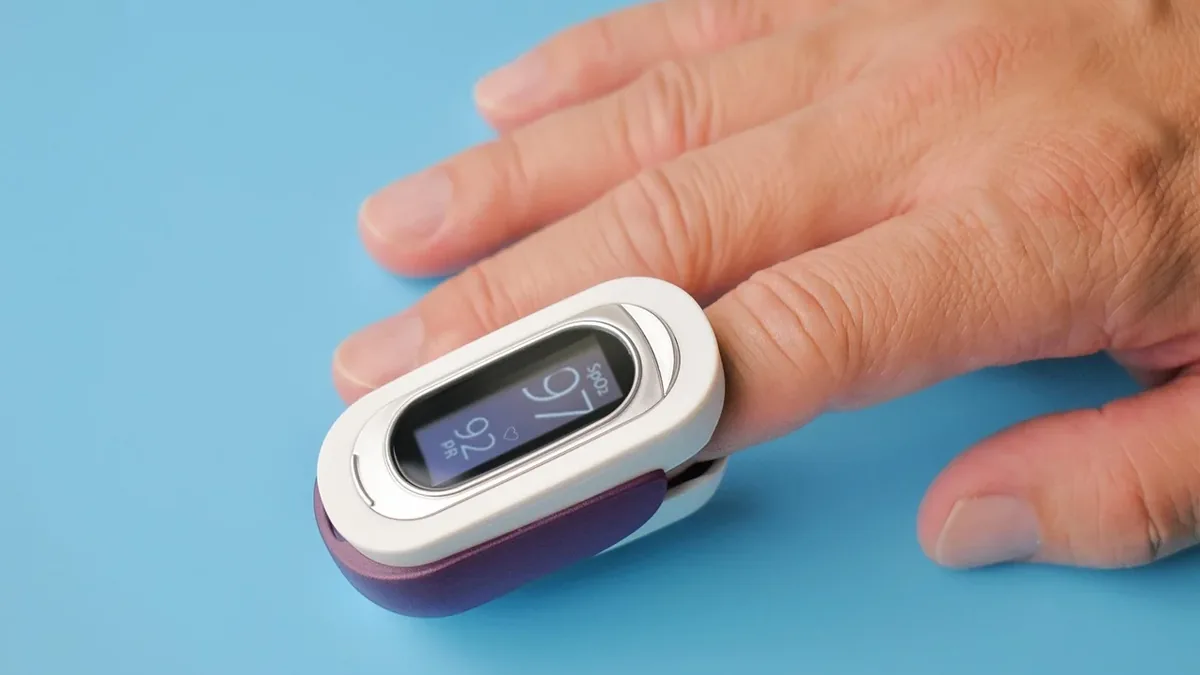
Nocturnal oximetry is a non-invasive procedure that continuously measures and records a patient's arterial oxygen saturation and heart rate throughout a night of sleep. The test is typically performed at home using a portable device, roughly the size of a wristwatch, which has a sensor probe that clips onto a fingertip or, less commonly, an earlobe. The sensor uses spectrophotometry to estimate oxygen saturation by passing two wavelengths of light through the tissue and detecting the differential absorption of oxygenated versus deoxygenated hemoglobin. The device stores the data, which is later downloaded and analyzed to produce a report showing saturation trends over time. Key metrics derived from the report include the average oxygen saturation, the minimum saturation recorded, and the oxygen desaturation index. This overview provides a foundational understanding of the test's methodology and output without interpreting its clinical significance.
What to know
A nocturnal oximetry report does not directly diagnose sleep apnea; it identifies hypoxemic patterns that strongly suggest its presence, but a formal diagnosis usually requires correlation with symptoms and often a full sleep study. The test has significant limitations, including its inability to detect apnea or hypopnea events directly, meaning it can miss cases of upper airway resistance that do not cause major oxygen drops. Proper sensor placement is critical, as movement artifacts can create inaccurate data that resembles pathological desaturation. It is generally not recommended for screening asymptomatic populations due to the risk of false positives and overdiagnosis. A common clinical threshold is an oxygen desaturation index of 5 or more events per hour, where a desaturation is typically defined as a drop in saturation of 4% or more from baseline. Patients should know that a normal oximetry study does not completely rule out all forms of sleep-disordered breathing.
Common questions
Is nocturnal oximetry the same as a full sleep study? No, it is a simplified screening test that measures only oxygen and heart rate, whereas polysomnography also monitors brain waves, eye movements, muscle activity, airflow, and breathing effort. How accurate is the test? Its accuracy for detecting moderate-to-severe obstructive sleep apnea is reasonably good, but its sensitivity for mild cases is poor, leading to many false-negative results. Can I sleep normally while wearing the device? Most people adapt quickly, though the finger sensor can feel awkward; it is important to try to follow your usual sleep routine for representative data. Who interprets the results? The data is reviewed by a sleep specialist or pulmonologist who integrates it with your clinical history. What if the recording fails? Technical failures are not uncommon, and you may need to repeat the test on another night. Does insurance cover this test? Coverage policies vary, but it is often covered when ordered by a physician for appropriate symptoms.
Pros and cons
The primary advantage of nocturnal oximetry is its simplicity, low cost, and high patient acceptability, enabling widespread screening in a natural sleep environment. It provides objective, graphical evidence of nocturnal hypoxemia that can be compelling for both patient and clinician. A significant con is its high false-negative rate, particularly for mild sleep apnea or hypopnea events that cause arousal without major oxygen desaturation, potentially delaying necessary diagnosis. Common mistakes include improper sensor fit leading to motion artifact, which can generate false-positive results and unnecessary anxiety or further testing. Patients often regret relying solely on a normal oximetry reading when classic symptoms persist, as it can provide false reassurance. Furthermore, it offers no data on sleep architecture or the direct cause of desaturations, which can be due to conditions other than sleep apnea, such as lung disease or nocturnal hypoventilation.
Who it suits
This test is best suited for patients with a high pre-test probability of moderate to severe obstructive sleep apnea, such as those with significant obesity, loud snoring, and witnessed apneas. It is a practical first-line tool for cardiologists and pulmonologists evaluating patients with unexplained heart failure, pulmonary hypertension, or difficult-to-control hypertension where sleep apnea is a suspected contributor. Nocturnal oximetry is also appropriate for monitoring the therapeutic response in patients already diagnosed with sleep-related hypoxemia and established on treatment like oxygen therapy or CPAP. It suits patients who are unable or unwilling to undergo in-laboratory polysomnography due to mobility issues, cost, or long wait times. It is generally not suited for the diagnosis of non-hypoxemic sleep disorders like narcolepsy, periodic limb movement disorder, or central sleep apnea without concomitant obstructive events. The test is also poorly suited for asymptomatic individuals or those with only mild, non-specific symptoms due to the high likelihood of ambiguous or misleading results.