Sleep Stages And Cycles
Origin and history
The scientific model of sleep stages and cycles originated from research in the United States and Europe during the mid-20 century. The foundational discovery was made at the University of Chicago in the early 1950s, where researchers first identified rapid eye movement (REM) sleep. This finding fundamentally changed the understanding of sleep from a uniform state to a structured, cyclical process. The subsequent development of electroencephalography (EEG) technology allowed scientists to categorize sleep into distinct stages based on brain wave patterns. By the 1960s, the standardized model dividing sleep into REM and non-REM (NREM) stages was widely established in sleep medicine. This framework was formally codified in the 1968 manual "A Manual of Standardized Terminology, Techniques and Scoring System for Sleep Stages of Human Subjects," which created the universal scoring system still in use today.
What it is for
The model of sleep stages and cycles exists to provide a scientific framework for understanding the architecture of normal sleep. It is used by clinicians and researchers to diagnose sleep disorders by identifying deviations from typical patterns. This framework helps explain the different physiological and neurological functions that occur during specific phases of sleep, such as memory consolidation or physical restoration. Understanding these cycles is crucial for identifying the root causes of problems like insomnia, sleep apnea, and narcolepsy. The model also informs the development of treatments and interventions aimed at improving sleep quality by targeting specific cycle disruptions. Furthermore, it provides a basis for public education on the importance of completing full sleep cycles for waking refreshment and long-term health.
Overview
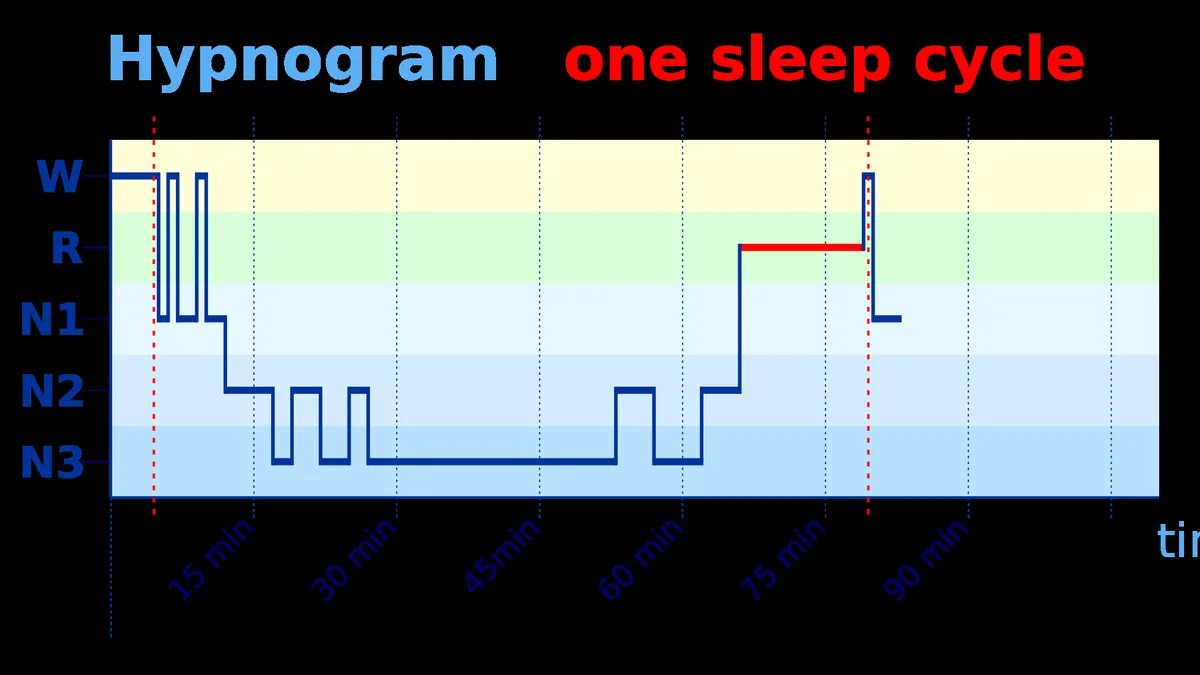
Sleep is organized into repeating cycles, each lasting approximately 90 to 110 minutes in adults. A single cycle progresses sequentially through three stages of Non-REM (NREM) sleep before entering a period of REM (Rapid Eye Movement) sleep. NREM Stage 1 is the lightest sleep, serving as the transition from wakefulness, while NREM Stage 2 is considered the onset of true, sustained sleep where heart rate and body temperature drop. NREM Stage 3, often called slow-wave or deep sleep, is the most restorative phase, crucial for physical recovery and immune function. REM sleep, characterized by brain activity similar to wakefulness, rapid eye movements, and muscle paralysis, is primarily associated with dreaming and cognitive functions like learning and mood regulation. A typical night involves four to six of these complete cycles, with the proportion of deep sleep decreasing and the duration of REM sleep increasing in later cycles.
What to know
The progression through stages is not always perfect, and brief awakenings or regressions to lighter sleep are common, though often not remembered. Disruptions from factors like noise, stress, or substances like alcohol and caffeine can fragment this architecture, reducing time in deeper stages. The length and composition of sleep cycles change significantly over a lifespan, with infants having much shorter cycles dominated by REM, and older adults experiencing reduced slow-wave sleep. Consistently cutting sleep short often truncates the final REM periods, which are the longest, potentially impacting emotional regulation and memory. Many sleep tracking devices attempt to estimate these stages using movement and heart rate, but their accuracy is limited compared to the clinical gold standard of polysomnography. Importantly, individual variation exists, and a healthy sleep structure is defined more by consistent cycling and adequate time in each stage over the week than by a single night's perfect pattern.
Common questions
A common question is whether waking up during a specific stage, like deep sleep, causes more grogginess, and the answer is yes, as arousal from deep sleep leads to sleep inertia. People often ask if dreaming only occurs in REM sleep, and while vivid, narrative dreams are most frequent in REM, simpler dream-like thoughts can occur in NREM sleep. Many wonder if they can train themselves to need fewer cycles, but the body requires a certain amount of each stage, and chronic reduction impairs function. A frequent concern is whether missing deep sleep one night can be recovered, and while the body prioritizes deep sleep the next opportunity, it may not fully compensate for all lost functions. Individuals often question the meaning of frequent awakenings shown on sleep trackers, which are usually normal micro-arousals that become problematic only if they prevent progression to deeper stages. Finally, people ask if all cycles are equally important, and while all contribute, the early cycles are richest in deep sleep and the later cycles in REM, making the full duration essential.
Pros and cons
A major pro of this model is that it provides an objective, biological basis for diagnosing and treating complex sleep disorders, moving beyond subjective complaint. It allows for targeted interventions, such as timing medication or CPAP therapy to address events in specific stages. However, a significant con is that an over-fixation on perfect cycle architecture, often fueled by consumer sleep trackers, can lead to orthosomnia, where anxiety about sleep data ironically worsens sleep. The framework can also be reductionist, as it primarily describes the structure of sleep rather than fully explaining the subjective experience of restfulness. Individuals with highly variable sleep patterns or non-24-hour circadian rhythms may find the standard model does not neatly describe their experience, leading to frustration. Furthermore, the clinical measurement of stages requires an intrusive lab environment that can itself disrupt natural sleep, potentially skewing the data it aims to collect.
Who it suits
This model of sleep stages and cycles is essential for sleep medicine specialists, researchers, and patients undergoing formal diagnosis for suspected sleep disorders like sleep apnea or periodic limb movement disorder. It is highly useful for individuals with unexplained daytime fatigue, as understanding their sleep architecture can reveal deficits in deep or REM sleep. The framework also benefits athletes and those in physical rehabilitation, as it highlights the critical role of deep sleep in physical recovery and tissue repair. However, it is less suited for individuals with mild or transient sleep issues whose anxiety may be exacerbated by overly scrutinizing their cycle data. People seeking a holistic, non-technical understanding of sleep wellness may find the detailed model overwhelming without professional guidance to interpret it within the broader context of sleep hygiene and circadian rhythm.
Latest Sleep Stages And Cycles news
Latest reporting
Jaw Pain Disorder Linked to Higher Sleep Apnea Risk
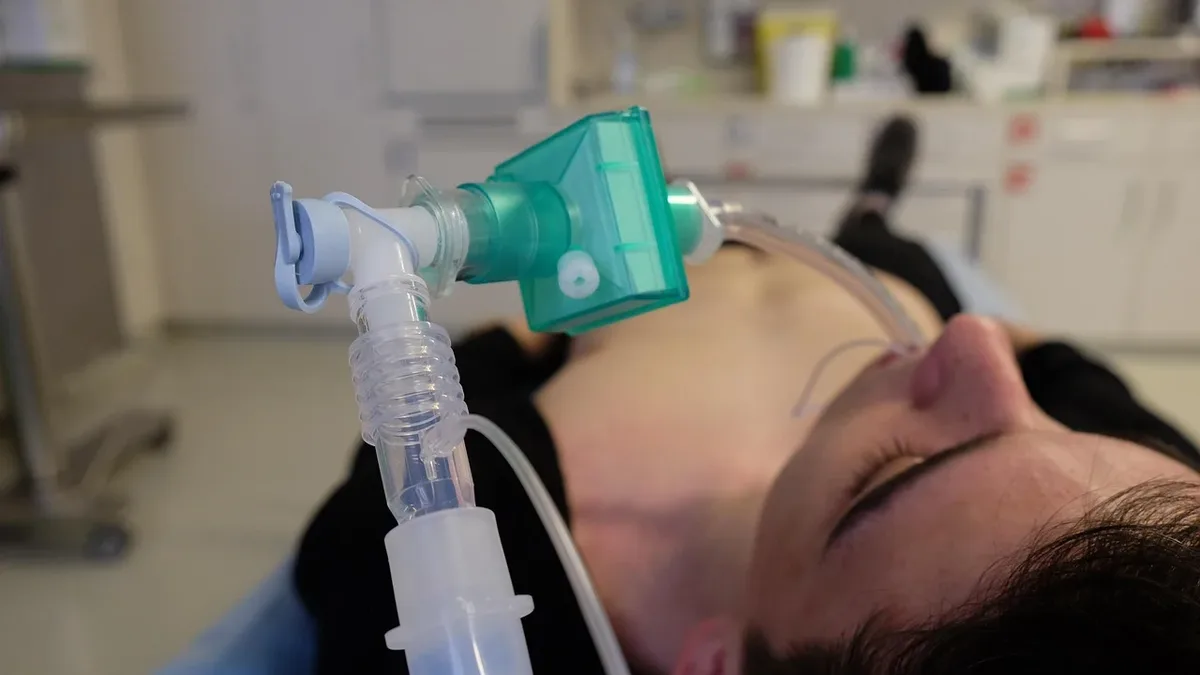
A new study finds patients with temporomandibular disorder are significantly more likely to screen at high risk for obstructive sleep apnea...

Grants Fund Sleep Research for Parkinson's Disease
The Michael J. Fox Foundation and Parkinson's UK have awarded grants for two research projects investigating whether improving restorative sleep can...

Noise Pollution Harms Sleep and Health, Experts Warn
Audiologist Laura Coco explains that chronic environmental noise is a significant public health hazard, disrupting sleep and contributing to...

Tsukuba Researchers Measure Sleep Quality at Population
Researchers at the University of Tsukuba are using home EEG devices, smartphone apps, and health records to objectively measure sleep quality in large

Mattress Topper Review Tests Comfort and Sleep Quality
A product reviewer tested 13 bestselling mattress toppers to assess their impact on sleep comfort, identifying top picks for budget, cooling, and firm

Study Links REM and Deep Sleep to Lower Disease Risk
A large UK Biobank study finds higher amounts of REM and deep sleep are linked to lower risks for dozens of diseases, with less than five hours of...